Find out what types of vaccinations you will need to enter the country, there may also be medications you’ll need to take before, during and even after your trip. Get your vaccinations early in case you have a reaction and need some recovery time.
You should consider a dental appointment if you haven’t had a check up in a while.
Be careful what you eat and drink.
Carry complete health information with you on your trip.
www.alltraveltips.com

Singaporeans moan that besides shopping, dining and the movies, there's not a lot you can do here. Ignore them. The must-see list for the one-day visitor to Singapore, especially the first-timer, is absorbingly long. There is very little chance you'll get bored. Most tourists tend to gravitate first towards the famed retail stretch of Orchard Road. Fine, get your fix of bold-faced names like Louis Vuitton, Chanel and every other couture label under the sun. When you've gotten that out of your system, dump your purchases back at the hotel and head out into the 'burbs where the real charm of Singapore lies. We're here to guide you to the top 10 places where tourists don't normally go; in short, the places where Singaporeans in the know live and play.
1. Singapore Botanic Gardens
So, you've arrived. It's early and nothing really opens for business until around 11 a.m., so how are you going to kill time? Slip on the trainers and head out to the Botanic Gardens (open 5 a.m. to midnight). At this time of the day, downtown Singapore's last remaining green lung is a cool, bucolic retreat filled with joggers, dogs and tai-chi practitioners. Wander through the swaths of virgin rainforest (the main boardwalk through it is entered from Upper Palm Valley Road) and then take in the National Orchid Garden's many-colored collection of 1,000 orchid species and 2,000 hybrids. When you're done, drop into the food court near Tanglin Gate for a traditional local breakfast of soft-boiled eggs, coffee and toast slathered with coconut jam.
2. Artwork at the Ritz-Carlton
It may seem a little strange to head to a hotel to look at artwork, but the Ritz-Carlton is no ordinary hotel. The massive three-ton Frank Stella installation at the entrance and the pair of Dale Chihuly crystal glass sculptures that anchor both wings of the building kick off one of Southeast Asia's finest (and under the radar) collections of modern and contemporary art. The majority of the pieces were specially commissioned for the public spaces and guest suites. The treasures on view include Andy Warhol and David Hockney's exuberant colors, Rainer Gross's geometric compositions, Henry Moore's restrained monochromatics and the lush botanicals of Robert Zakanitch. It's all free to view, and you even get an iPod-guided tour.
3. Chinatown Heritage Centre
Let the other tourist hordes charge over to the newly minted Peranakan Museum or the gloomy Asian Civilisations Museum. If you do only one cultural thing during your 24-hour Singapore layover, it must be a tour of the unheralded Chinatown Heritage Centre, where entire sets of bedrooms, kitchens and street scenes from the late-19th century and early-20th century have been faithfully recreated. It's an authentic slice of Singapore's history that's made all the more fascinating by the gleaming skyscrapers just a few blocks away. And if you must, pick up a kitschy souvenir from the gift shop on your way out.
4. Plastic Surgery
In case you missed the memo, the place for plastic surgery is Asia. While many people head to Bangkok and Seoul for assorted nips and tucks, the locals make a beeline for the ultra-swish, Richard Meier–designed Camden Medical Centre. You may not have time for a full makeover, but squeeze in a spot of Botox or a non-surgical facelift with local celebrity surgeon Woffles Wu. And then adjourn downstairs for snapper pie and Pavlova at Whitebait & Kale.
5. Electronics for Cheap
Tokyo may have the latest in electronic gadgets, but Singapore has the widest range, and luckily for the time-pressed shopper, they're all clustered in two massive multistory emporia. Handicams, portable DVD players, mobile phones, hi-tech cameras, MP3 players and laptops in just about every imaginable configuration are up for grabs at Funan Digitalife Mall and Sim Lim Square. The prices are usually about 10% to 20% cheaper than at other commercial outlets. At Sim Lim Square especially, good deals can be had with some serious haggling, and many retailers will knock off a few extra dollars if you pay in cash.
6. Haji Lane
This tiny lane, hidden away in the heart of the Muslim quarter, is a fashionista's paradise. With very little fanfare, the collection of narrow shop-houses have, in less than a year, been transformed into an aggressively hip retail stretch recalling Le Marais in Paris or New York's Meatpacking District. Know It Nothing is a stylish industrial space that stocks beautifully tailored dress shirts stitched with silver skull buttons by Japanese label Garni. Next, pop into Pluck for its shabby chic collection of Austin Powers–inspired cushion covers and a cute ice-cream parlor. A few doors down, Salad boasts a range of home accessories like laser-cut table mats and Hong Kong–based Carrie Chau's quirky postcards. If you're feeling peckish, have an authentic Middle Eastern lunch around the corner at Cafe le Caire.
7. The Singapore Flyer
The 165-meter-high Flyer is Singapore's answer to the London Eye. For the moment, it is the world's largest observation wheel (that title will go to Beijing when its version opens in 2009). Despite much fanfare and hype, the locals have never really taken to the Flyer, grousing that it's too far from anywhere (it's not) and S$29.50 is a lot of money to pay for a 30-minute ride. Lucky you, since this means you'll almost never have to wait in line. The best time to hitch a ride is at dusk when the entire row of downtown skyscrapers is softly lit. Back on the ground, head for a dinner of chili crabs at Seafood Paradise.
8. The White Rabbit
Back in the '50s, Dempsey Hill was home to the British Army. These days, the former barracks, set amidst lush jungle, have been transformed into a fine collection of restaurants, bars, art galleries, epiceries and spas. Recently, the long abandoned garrison church was reopened as the White Rabbit, a restaurant and bar serving up Euro comfort food. After extensive renovations, its lofty interiors are now a mood-lit bolt-hole that heaves with tout le monde. When people aren't busy air-kissing and waving to one another across the crowded dining space, they're tucking into chef Daniel Sia's cleverly re-imagined classics, like macaroni and cheese drizzled with truffle sauce and a deconstructed Black Forest cake. After dinner, head up the hill for a chilled mojito at Margarita's.
9. Geylang
Once upon a time, Bugis Street was Singapore's premier red light district (and forever immortalized in Peter Bogdanovich's Saint Jack), but the crown has long since passed to Geylang, an atmospheric quarter on Singapore's east coast that bristles with great period architecture, leggy street walkers and some of the best local food on the island. On offer is a greedy grab of Peranakan, Indian, Malay and regional Chinese standards including the coconut rice and curry chicken at Bali Nasi Lemak, spicy noodles with roast pork and prawns at Kuching Kolo Mee and the Hakka favourite of rice, vegetables, tofu and peanuts in a tea-based broth at Lei Cha Fan.
10. Zouk
Despite its prim, straight-laced reputation, Singapore's nightlife is actually quite racy, though compared to Barcelona or New York, the party ends early (around 3 a.m.). After nearly two decades, Zouk is still the throbbing heart of the action. The pulsating institution is a strobe-lit, rambling warren of dance floors, figure-hugging outfits, swagger and seasoned moves. For many of the pretty young hipsters here, it's a rite of passage. If it isn't enough to satisfy your urge to groove, drop into the mammoth Ministry of Sound for a quick shimmy.
www.time.com
Hardware
There are 9 different power plugs in use around the globe, so a multi power plug adaptor is a necessity.
There are 39 different telephone jacks in use worldwide. You must have a telephone adapter to handle each of the phone jacks where you plan to travel.
It may make sense to do a bit of research before hand to see what power plugs and telephone jacks are in use in the countries on your trip. If you’re booking accommodation before you go make sure you check with the hotel for a room what wireless or telephone faciliaties they have. Perhaps they have an Internet room for those traveling with laptops.
Software
Modems from one region don’t necessarily recognize dial tones from other regions. To ensure you can access the web from any region, it’s a good idea to learn how to set your modem options so you can dial manually.
Security
The physical security of your laptop is always an issue, wherever you are.
When traveling, keep your laptop in sight at all times. Don’t put your laptop in with your other luggage, as baggage handlers certainly won’t be treating your laptop as a fragile item! Take it as hand luggage on your flight or any bus journeys and try not to store it in the overhead storage area where it could get bashed around by someone else.
Letting your laptop go through the x-ray equipment will not harm your laptop. Metal detectors, however, can cause damage, so request politely that Security/Customs do a hand check rather than use a metal detector.
Check your password and log-off procedures for any sensitive websites before you leave home. When you finish sending email or checking bank account details on your trip be sure that your account is closed so others can’t access your details.
Documentation
It’s important when returning back home that you have all the original receipts or correct Customs documentation. As the onus is on you to prove that you did not purchase your laptop whilst traveling, these documents will show that the laptop you have is the one you left the country with. If you can’t prove this point you may have to pay duty and/or taxes on your own laptop!
www.hostelbookers.com
Go paperless with your PDA.
Save a tree — and your back — by downloading travel guides, maps, and even boarding passes onto a handheld device. Lonely Planet sells travel content in “Pick & Mix Chapters” downloads, allowing you to buy only the information you need and view it on your PDA, and Rough Guides provides free downloads of cultural audio “iToors” for iPods. On domestic flights, Air Canada offers paperless tickets featuring scannable electronic bar codes that are sent to your cell phone or PDA. Continental Airlines is currently testing this technology.
Streamline your suitcase.
Even 10 extra pounds per passenger translates into the need for extra fuel, which can then lead to more carbon dioxide emissions. Pack light.
Towel off twice.
Use only the towels you need, hang them to dry, then reuse. Likewise, why have your sheets changed every day? Leave a note for housekeeping to skip changing the sheets and towels. Opting to use them again can save up to 30 gallons of water a day.
Bring your own shampoo — or take theirs.
Hotel soaps and bottles of shampoo, conditioner, and lotion that have been opened — even if just for one use — are routinely tossed in the trash. Carry your own amenities in reusable travel containers. If you open one of theirs, toss it in your bag to be finished off at home and refilled for future trips.
Eat locally.
An American meal involves food flown in from, on average, five different countries, according to the Natural Resources Defense Council. Minimize food-transport pollution by choosing a restaurant that utilizes regional ingredients.
Drink locally.
If the tap water is safe, go ahead and drink it. According to the Environmental Protection Agency, while public water gets tested for contaminants thousands of times a year, bottled-water facilities may not test their products as frequently. Plus, a discarded plastic bottle can take years to biodegrade.
Walk, ride, or rent a hybrid.
Too far to walk? Hop on a bus or the subway. Most cities’ transportation-authority websites have a route-planner function; also try www.hopstop.com or www.subwaynavigator.com. If your trip requires a car, rent a hybrid (choose “hybrid” under “car options” at www.kayak.com) to reduce emissions by up to one-half. The next best option? Find a “green” car at www.hybrids.orbitz.com.
Written by Nicole Alper, Elizabeth Jenkins, Kate Merker, and Lori Seto
In this article I will highlight the most important factors that you need to take into consideration or think about when planning a safari. I intend to write some sequels focusing in detail on the safari options in different southern African countries, including South Africa, Botswana, Namibia, Zambia, Zimbabwe and Mozambique.
1. Do some research
Start by reading articles or books about African safaris and the ‘big five’ Visit tour operator and travel agency websites to compare information. Make sure as part of your research you get a safari video to have a preview of what to expect.Through your research you will decide if you will go for a packaged tour or a self drive or a combination of both.
2. Cost of a Safari
Various factors play a role in one's choice of safari destination and, for most people, cost is one of the many criteria that influence this important decision. The explanation for cost differences between safari destinations, and between camps/lodges within the same areas, is multi-faceted and complicated. The safari market in southern Africa is highly competitive and driven by supply and demand; for instance, right now, Zimbabwe safaris are at a bargain because of the low demand resulting from the political and economic crisis in the country and the uncertainty as to whether or not the general elections coming in March 2008 will be peaceful. It is important to note that in most cases the cost of a safari excludes international flights to/from Africa; visas; passports; vaccination costs; excess baggage charges; optional excursions; spending money; tips; local and airport taxes.
3. Game Concentration
For most people, an African safari is not complete when they do not see the big five – elephant, rhino, leopard, lion and leopard. These animals are concentrated at different places. Please be aware that your trip might bring you into close contact with these wild animals, which can be a threat to your safety and your health. Many of the safari camps are unfenced and particular care must be taken. It is essential that you always follow the advice of your guides, do not walk out on your own and do not touch any plants, animals or insects. You should understand the risks involved and take responsibility for your own safety. Please note that most safari lodges will require you to sign a personal indemnity form and you must be prepared to sign these.
4. Camp/lodge experience.
The level of style and luxury in accommodation, the quality of food and service, facilities and amenities are all important factors to consider when planning a safari. The more expensive properties invariably excel in these elements of the overall experience.
5. Wilderness and exclusivity.
As a rule, the larger and more private the concession /reserve, the higher the premium. Botswana (where private concessions are typically 100,000 acres or larger) is the most prominent example of this model of 'low volume / high value' eco-tourism. Zambia is an 'emerging' safari destination heading towards this model.
6. Remoteness.
The further from civilization a camp/lodge, the more expensive it is to supply and operate, and the higher the access costs for guests. Zambia's three major National Parks are very different and fairly far removed from each other. This makes a Zambian safari a very diverse experience, but travel costs are a little higher than in Botswana for example. Namibia, home to some of southern Africa's most remote camps, is perhaps the most pronounced example of this type of safari.
7. Convenience.
Camps/lodges with private airstrips that are close to camp offer increased convenience due to shorter transfer times between the airstrip and camp. This means less time in transit and more time on safari or relaxing. Such airstrips, in addition to being expensive to build and maintain, are desirable to guests and attract a premium.
8. Political situation.
The biggest factor influencing the discounted rates in Zimbabwe is the negative perception surrounding the government of Robert Mugabe. Without doubt this regime has had a very negative impact on the lives of local Zimbabweans but, as a safari destination for foreign visitors, it is still a good deal destination.
9. Passports & visas.
A full passport is essential and must be valid for at least six months after your return. Generally, visas are not required in South Africa and Botswana for United States and United Kingdom passport holders. Visas are required for Zimbabwe and Zambia.
10. Insurance.
It is a condition of booking for most safari tours that all passengers have insurance cover. Your insurance should be fully comprehensive and include 24-hour emergency medical cover and repatriation along with general cover for travel cancellation and theft of valuables and personal items.
11. Health.
You should consult your doctor at least six weeks prior to travel. If guests have any medication requirements an adequate supply should be brought from home, as it might not be available locally. Anti-malaria medication is essential. It is recommended that visitors bring plenty of insect repellent and sun cream.
12. Safety & security.
In general, people in Africa have an enviable reputation for being friendly and welcoming. Along with most countries around the world, mugging can be a problem in certain towns and it is advisable that you do not walk at night unless you know the area well. If you are driving yourself it is sensible to arrive at your destination before dark as a myriad of animals enjoy lying on the roads at night. It is always sensible when traveling to take precautions against theft. By far the best precaution is to avoid taking valuables with you on holiday. If you do carry valuables ensure you are discreet. Do not leave any valuables or luggage unattended in a vehicle, unless in a locked trunk.
13. Clothing.
The dress code at all of the camps and lodges is casual and there is no requirement to dress for dinner. We recommend that you wear neutral colors with a good pair of lightweight walking boots for game walks. Evenings are generally spent around a campfire, so a lightweight jumper is advisable. Early morning and night game drives can get very cold, particularly in June/July, so it is recommended that you bring a warm jacket and woolly hat. During the heat of the day a shady hat is essential. A long sleeved shirt and long trousers offer a degree of protection from mosquitoes.
14. Fitness levels.
There is generally no fitness requirement for safaris. On walking safaris the walks are slow and gentle, although the ground is often uneven. Game drives can be bumpy at times and might be uncomfortable for people with back problems.
15. Luggage limits.
A luggage limit applies for light aircraft transfers between camps. Soft bags are recommended for these flights. You will normally be advised of the requirements (if any) at the time of booking.
16. Travel in Africa.
Part of what makes Africa so special is that it is very different from Europe and the USA. Please accept that things do not always happen the way you would normally expect and you must be prepared to adapt your arrangements as necessary. Whilst tour operators make every effort to ensure that your trip goes smoothly it is recommended that you be patient and understanding, accepting a degree of uncertainty and enjoying Africa as it is.
17. Climate.
Although local weather conditions vary, the main weather patterns are the same throughout Southern Africa. Evenings and early mornings can get quite chilly, particularly between May and August. October can be extremely hot and humid (although this is the best time for game viewing as animals congregate around the remaining water). The rainy season is normally between November and March.
18. Currency.
The local currencies in the major safari destination countries are the Zambian Kwacha, the Botswana Pula, South African Rand, Namibian Dollar, Mozambican Metical and the Zimbabwean Dollar. Tourists are expected to use US Dollars in camps, lodges and hotels. For local shopping for souvenirs and sundries you will need local currency. Banks will generally exchange US Dollars, English Pounds, Euros and US Dollars are required for visas purchased at the border posts (take the correct amount as any change will be given in local currency). In most of these countries, especially Zimbabwe, there are black market currency dealers. Changing currency in the black market is illegal, and you can be robbed of your money and valuables. Always ask your hotel staff about exchanging currency.
19. Time.
Zambia, Namibia, Mozambique, Botswana, Zimbabwe and South Africa are all 2 hours ahead of GMT.
20. Memories
Get a journal book, camera or camcorder to document your experiences.
Happy safari planning and enjoy the unspoiled African wild!
by: Lovemore Ncube
•TRACK YOUR SAVINGS: Luxurious flights can be avoided. Search for lowest airfare providers. Spending too much on flights may hamper the budget dead line. Various Airlines are available which charge low rates to the passengers. Travelers can check the list of flights and book them according to their budget.
•ONLINE TRAVEL AGENTS: To plan out your travel online travel agents can provide good offers and bountiful information of desired destination. They provide easy services to customers and all sorts of comforts which are desired by travelers without crossing budget.
•SHUTTLE BUSES: Taxis are often too costly. The shuttle bus service is the most cost effective way for reaching the desired destinations. Major airports offer such service to the passengers. They run from airport to the hotel within the city or at city center. Cabs or local taxis can be hired at cheaper rates in the city.
•SHORTER TRIP: Trip should be planned for full enjoyment, no matter if it is planned for few days. Short trip saves much money which meets budget dead line. This technique will prove stress buster and fruitful in lowering the cost. Another short vacation can be planned after some time and money saved in this trip can be used later.
•OPT CAMPING: Expensive hotels and luxurious resorts prove to be bad option for low budget tour. Spending too much on enjoying the stay can cause over budget. It can be avoided by parking your vehicle near restrooms and close to running water, it will save your penny.
•BUY A TIMESHARE: If you are willing to plan out your holidays to a particular location every year, may be near coastal areas or hilly regions, you may purchase a lodging place. It will save your penny from expensive stay.
•DISCOUNT VACATIONS: Often special offers like holiday package or free coupons are available for enjoying the long weekend. Such opportunities should not be missed. Yellow pages can also be checked for it.
Application of your sharp mind and vigilance over cost issues can prove to be beneficial in cutting down of heavy expenses inflicted on you during traveling. Requirement is of careful planning out vacations and you can rock within budget.
Posted by Lauren

For gay and lesbian travelers, there are few greater destinations than the United States.
Its major cities are amongst the wildest party destinations with the greatest number of gay and lesbian bars and clubs, and a whole host of riotous parades, festivals and marches. Nor is it a coincidence that they boast a plethora of the world’s finest theatres, art galleries, museums and other centers of cultural activity.
In this section, we detail three destinations that we felt sure would not disappoint.
Gay New York City
New York City was voted the most popular destination for gay and lesbian travel by PlanetOut for 2006. And it really doesn’t take a great stretch of the imagination to see why.
In addition to being the self-styled ‘capital of the world’, the Big Apple is arguably also the ‘gay capital of the world’.
Traditionally, the home of the New York gay and lesbian community has been Greenwich Village (or, as New Yorkers calls it, West Village). If it’s gay landmarks that you’re looking for, and you want to take in a bit of the area’s history, you can stop by the former residences of the lesbian author Willa Cather and the gay civil rights activist Bayard Rustin.
But gay life in New York is by no means confined to West Village, and in the last few years other pockets of gay life have sprung up across the city. There is a strong community in East Village and the Upper West Side particularly, while Chelsea, just to the north of Greenwich Village, may be the city’s most staunchly gay male neighborhood.
During the day you’d be foolish if you didn’t take the opportunity to explore the entire length and breadth of the island of Manhattan.
The Upper East Side with its antique dealers like Christie's and Sotheby's, bespoke jewelers, exclusive boutiques and stylish restaurants, may be easy on the eye, but it certainly isn’t easy on the wallet. Gallery-wise the visitor to New York is spoilt for choice, as the city is indisputably the nation’s artistic motor.
Historically, many of those who have driven this artistic momentum, and who continue to drive it, are gay men and women.
But it’s after dark that the city really comes into its own. New York is a city that truly runs the full gamut from the highly sophisticated to the seedy, and even to the downright sleazy.
You can trip the light fantastic and take in a Broadway musical, head to the theatre or the opera, or join the throngs of pleasure-seekers in the city’s unparalleled club and bar scene.
The highlight of the gay calendar – the annual LGBT Pride March – which includes Rally, Pridefest, and Dance on the Pier, takes place from June 18 to 25. The March, which traditionally starts on the Sunday, is one of the largest and most important of the world’s pride events with more than 700,000 people taking part. But there’s also a serious note to the festivities.
The symbolic significance of the march mounts as it leaves Fifth Avenue, takes a right on to Greenwich Avenue and, then a left on to Christopher Street and into Greenwich Village, the area that has witnessed, and acted as catalyst, to some of the seminal moments in gay history and cultural development.
The infamous Stonewall riots of June 1969 (the importance of which is commemorated with a plaque at Stonewall Place) came against a backdrop of activism inspired by a refusal to yield to intolerance and bigotry, and proved to be the defining moment for the gay civil rights community in the US.
Gay Los Angeles
Los Angeles, with its gorgeous beaches lined with palm trees swaying in the gentle sea breezes, its throngs of gay and lesbian bars, clubs, shops and restaurants, is not so much a great gay travel destination, as a gay paradise. So it’s little wonder that it has a rapidly expanding gay community amongst the city’s population of 17 million people.
If it was the silver screen that created Hollywood, and turned it into a byword for glitz and glamour, it is now governed by the value-system that it spawned. This is the ‘City of Angels’ after all, and with movie-stars competing with one another for attention on the Sunset Strip, and their gay counterparts doing likewise on Santa Monica Boulevard, physical beauty is high on the agenda.
From the pumped gym-goers to the gorgeous sun-kissed beach-loungers, L.A.’s image-obsession at times seems to know no bounds. And it doesn’t get much more image-obsessed than West Hollywood – WeHo to the initiated – where beautiful gay men and women come together to eat, drink, cruise and have a good time.
Los Angeles is a city that loves to eat out, and it goes without saying that gay Angelenos are obviously no exception. Many of the restaurants in West Hollywood, and to an even greater extent, on Santa Monica Boulevard, cater to a largely gay clientele.
There, a welter of top-class restaurants can furnish you with great food and even better opportunities for people-watching. In addition to its many gay and lesbian bars and clubs, Santa Monica Boulevard also has a vast array of gay-interest shops. Elsewhere in Hollywood, the LGBT Center on North Hudson Avenue is held to be the biggest gay and lesbian organization anywhere in the world.
If you fancy a little excursion, (and providing you don’t get caught in the traffic) an hour’s drive from central Los Angeles takes you to Long Beach where another energetic gay scene can be found. The ‘Broadway Corridor’, as it’s known to Long Beach residents, has a large number of gay-owned businesses, and is a great shopping destination, as well as having the usual array of bustling cafes, smart restaurants and bars.
Gay San Francisco
A little further up the Californian coast from Los Angeles, and if anything, it just gets better for the gay or lesbian traveler. A small city that makes up in vibrancy and feverish gay activity for what it lacks in size, San Francisco is a city defined by countercultural open-mindedness and freedom of expression.
Like New York, the city has the military to thank – at least in part – for the accidental role that it played in developing its gay identity. During the Second World War, sailors who received a ‘blue discharge’ for homosexual offences frequently chose to stay in the ports where they were, rather than head home in disgrace. And so a gay community was born.
Now, many years on, as a reflection of San Francisco’s status as one of the world’s preeminent gay centers, the city’s Pride Event (held in the last week of June) is no small affair. As well as this massive outpouring of gay and lesbian pride, the city also puts on several other events annually that are well worth a look.
New York may have Greenwich Village and Chelsea, while LA has West Hollywood and Santa Monica Boulevard, but San Francisco has the even more distinctly rainbow-colored communities of Castro, Polk Street and the SOMA. And, of the three, it’s Castro that really stands out as possibly the world’s gayest street, whose siren song can be heard across the known gay world.
The Castro, with nearby Market Street (on which can be found a massive LGBT community center) to the fore, is, in effect, an all-gay neighborhood with a network of bars, clubs, shops, gyms and saunas.
Both within and outside the borders of San Francisco’s gay districts, the city has a great gastronomical reputation, with any number of excellent restaurants to choose from.
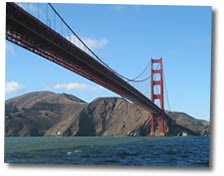
Quite apart from the gay tourism, San Francisco has a wealth of other sights to see. Iconic images such as the city’s familiar undulations, the glorious Golden Gate Bridge, and the eerie Alcatraz prison lurking out in the bay, stand out.
The city is also blessed with a host of fantastic art galleries and museums, such as the San Francisco Museum of Modern Art, and downtown on ‘Theatre Row’, some outstanding theatrical offerings.
hostelbookers.com
More and more travellers of all ages are setting off to explore the world independently.
Whether you are travelling around Western Europe by train or backpacking through the jungles of East Asia our advice will help to keep you safe.
See our Travel Checklist for some general advice and check our Travel Advice for the countries you plan to visit.
Stay safe and trouble-free:
•get a good guidebook and plan your journey
•ask friends who have travelled for advice
•you’ll be most vulnerable when you first arrive, so book accommodation in advance for your first night away
•if you go out at night, make sure you know how to get back to your accommodation - many hotels and hostels can give you cards that show you how to get back
•obey and respect the local laws - we can’t get you out of prison if you’re arrested abroad
•respect local customs and dress codes – you may cause offence and stand out as a tourist (and target) for thieves
•only change money in banks or legal foreign exchange bureaus – you don’t want to be given fake currency
keep a receipt of all money exchanges
•be very cautious about hitchhiking, especially at night - always travel in pairs and be aware that drivers may expect payment
•take a first aid kit, especially if you are travelling to remote areas
•send important information to your web-based email account for easy access
Drugs and alcohol
•be aware of local attitudes to alcohol and drink sensibly
•remember your insurance policy is unlikely to cover you for drunken accidents!
•don’t ever try to drink alcohol or import it into a country where laws don’t allow it - you could face severe penalties
•don’t get involved with illegal drugs abroad - the penalties may be severe and your insurance will not cover you for illness
•never carry packages through customs for other people, even if you have befriended them during your trip
•don’t travel across borders in other people’s vehicles or lend your vehicle to someone else
•always pack your own baggage and never leave it unattended
Visas and passports
•make sure you’ve got the correct work permits if you’re planning to work whilst travelling - you could face severe penalties or deportation if you work illegally
•don’t overstay your visa - it could lead to a fine or prison. You can extend your visa in most places
fco.gov.uk
Jet lag is an awkward side effect of jet travel when you cross too many time zones for your body's liking. Face it, most of us have enough problems when we shift just an hour to daylight savings. Follow these tips on avoiding jet lag to help reduce the effects.
Not all these tips are relevant for every trip, especially if you're traveling on business at short notice, but at least some of them should be useful for you.
1. Adjust your sleep time
Start helping your body clock to adjust to the new time zone by changing the times that you go to sleep at night and awaken in the morning. You'll start to become accustomed to the new times. Make the adjustment about an hour each night.
2. Set your watch
As soon as you board your flight, set your watch to the new time. We look at our watches an amazingly high amount of times, so adjusting the time as soon as possible will help your mind realize that it's changing clocks.
3. Drink water. Lots of it
Sure, you can ask the stewardess for water but they have hundreds of other passengers to look after as well. Buy a bottle of water once you've passed through airport control and drink plenty of water during your flight.
4. Say no to coffee and alcohol
They both act as dehydrators. So they'll help to dry up your body even more than the flight already does. Soft drinks or water are to be preferred.
5. Get some rest on the flight
Depending on how enthusiastic the cabin staff are, this may be easier said than done. And if that child behind you rocks your seat once more, then that's another story. If you get the option, a window seat or one in the center of a block of seats will minimize the number of people who need to ask you to move out of their way. Noise canceling headphones aren't standard issue on many flights, so if you are a regular traveler then treat yourself to a set. They really do cut down the disturbance of engine noise.
6. Go walkabout occasionally
OK, this is at odds with getting rest. But sitting down for hours on end isn't a good idea either. Walk up and down the aisles a few times. Not so much that you're pacing them but certainly go for this exercise a few times on a long flight. Just be certain not to time your expedition for meal or drinks or duty free services.
7. Adjust to your new time zone on the plane
If it's daytime at your destination, stay awake. If it's night where you are going, get some sleep. You can catch up on the in flight entertainment when you've got a bigger screen and better sound. Start adjusting as soon as you can.
8. Keep adjusting at your destination
Even if you've been on a plane for hours and hours. The sooner you start adjusting, the better. So if you arrive in the dead of night, get to sleep. A dose of melatonin may help here - it's a natural sleeping aid that's already produced by your body.
by: Trevor Johnson
With the rash of reports from travelers around the world getting stung by bedbugs and bringing them home it is no wonder people are in fear every time they leave home. Whether you are hiking in a remote area staying in a flophouse or traveling first class staying at a five star resort you are in danger of an attack of these blood thirsty vermin. Here are a few things you can do to dramatically reduce your chance of bed bug bites though.
• First, never put your bags or clothes on the bed. This common mistake is a virtual invitation for the bugs to hitch a ride home with you. Never leave your clothes or bags on the hotel floor.
• Look behind the headboard and pull the bed out a foot or so look all around the bed for black specks. These creatures are very small if you see anything suspicious call the front desk. Leave the bed out from the wall during your stay. Bed bugs can not fly so if they have been coming from the nightstand they will have to get to you some other way.
• Take a roll of clear packing tape with you while you travel. Wrap the legs of the bed sticky side out to trap the bed bugs trying to get to you. I know this seems extreme but you would rather feel weird than get stung.
• Pull all of the bedding off the sides of the bed and look under the seams of the mattress. You are looking for something that looks like dirt smudges. This is the trail of blood and feces left by the bed bugs. If you find this leave the hotel once you find an infestation you should leave as fast as possible.
• If you are an avid traveler I suggest taking two new king-size sheets and sewing them together on the bottom and sides. Use this at night like a big sleeping bag. Make sure and inspect and fold in the morning. Place this in a garbage bag and seal it while returning home. Unpack this before anything else and wash with the hottest water you have before using again.
• Before leaving the hotel carefully inspect you luggage. Look under all the seams, the bugs you are looking for are sometimes small as a pinhead. Any discoloration, red marks, or stains are tell-tale signs of bed bugs.
• Upon arriving home do not unpack your luggage in your bedroom. Unpack your luggage in your garage. Immediately wash your clothes in the hottest setting your fabrics will stand. Bag up any dry cleaning and take it there ASAP. Leave your luggage in the garage or place a bag around the luggage before returning to your room.
I know this seems like overkill but if you ever get bedbugs you will gladly apply these helpful tips the next time you travel, trust me..
In my next article I will explain how to handle finding bed bugs after you have stayed at a hotel. Even if you find them you do not have to bring them home.
by: Timothy Russell
Currency is one of the most important parts of any trip. We offer some tips on where best to change your money, a foreign currency converter and other tips to help your well earned dollar travel that bit further.
ATM Machines and Currency Exchange - Tips on using your ATM card when travelling overseas. If well researched your ATM card can offer you the best exchange rates and solve the problem of carrying large wads of money around.
** Currency Converter - We have linked up with Oanda to offer you a multi currency converter that allows you to calculate the exchange rate of most of the world's currencies. Please note that the link will open in a new window.
Credit Cards - Another way to avoid carrying lost of cash is to use your credit card. Not all cards are equal though, and we look at some things you should be aware of when travelling.
ATM Card Tips and Credit Card Tips - While using your credit cards and ATM cards is generally a good idea, there is risk attached. We look at some of the things you should be aware of when using your cards.
Travellers Cheques - While we recommend using your ATM or credit cards when travelling, travellers cheques can help you avoid certain potential problems associated with using your cards, but that extra piece of mind comes at a cost.
Pictures of the Euro - Many of us are accustomed to Europe's old currencies, the franc, lira etc but with the Euro now being used in almost every European country it helps to get acquainted with how this new currency looks.
VAT Refunds for Travellers in Thailand - Guide to claiming back VAT on purchases made in Thailand.
Asiantraveltips.com
Rwanda, the land of one thousand hills and 'hundreds attractions' is an extraordinary place where serene scenery and placid people greet you at every juncture. Rwanda is safe and secure with an overwhelming renaissance of Rwandese national pride and cultural reconstruction. It is full of sights and delights, waiting to be explored. If Rwanda is on your travel list there is no better time to runaway to Rwanda...visit today you would want to stay!
The country is well known mostly because of its horrible recent history and you might think that Rwanda should therefore be more the scope for No governmental organization than for travelers. Nowadays, nothing is less true. Rwanda has wonderful people, breathtaking beautiful lakes, challenging mountains, stunning scenery, perfect climate, rare species of apes, excellent roads, express buses, good and cheap food and beer, various accommodation options, fast internet, only few tourists outside the gorilla-homes, you will found it all in Rwanda, a safe and yet to be discovered backpackers haven!
Because of its small size, Rwanda attractions are near each other and can be reached quite easily and safely.
1. KIGALI CITY: A NICE PLACE TO EXPERIENCE AN AFRICAN CAPITAL
Kigali is an interesting mix of rural and urban town overflowing on juxtaposed hilly terrain. New construction is everywhere and large mansions stand side by side with mud brick huts and lean roads. It has a peaceful feel and the center is located upon the hilltop expanse. It feels safe and getting around is easy on foot or minibuses...many and new. For a bit more taxis can whiz you anywhere without breaking the bank. Kigali is a nice place to experience an African capital.
2. KGALI GENOCIDE MEMORIALS CENTER IN GISOZI
During the genocide in Rwanda in 1994, over a million people were murdered. Some 250,000 perished on the streets and in the houses, churches and hospitals of Kigali alone. The Kigali Genocide memorial center contains ten mass graves- a site of burial for almost victims, who were killed in the Kigali region. After the genocide, as mass graves were being discovered around the city. It was decided that a single monument/ burial place should be created, where the victims could be laid to rest with dignity, this is now their final resting place. The memorial houses a children̢۪s section, a particularly powerful experience to read about the children- how they lived, and how they died. Amongst other things, it traces how things came to being so bad, how the ideology of genocide emerged, how the tragedy could have been averted, and how the world ignored the signs and warnings repeatedly. Some of the survivors of the genocide have been trained as guides at the center. Open 10am to 5pm daily. Entrance is free but at the door there is a box for donation. The place is really heart breaking!
4. MOUNTAIN GORILLAS TREKKING
A Mountain Gorilla Trekking is the pinnacle of all the wildlife experiences available in Africa and Rwanda is with no doubt the best place for this. People are limited to spend only one hour with the Gorillas and expect to hike for two to four hours to see them. These incredible primates are divided into four groups that have been habituated over the decades; it̢۪s a thing not to miss in Rwanda. Don't miss spending an hour with these magical creatures. It does require planning in advance, and contacting the National Park or a local tour operator to check what the latest system they have implemented with regards to how you get a permit - but it is all worthwhile. Also, don't be put off by the price - a high price is needed to ensure that protecting the gorillas is economically sustainable for the local area.
5. MOUNTAINS CLIMBING
The National park office offers guided climbs to the top of 2 volcano among the 5 of the Virunga chain, Visoke (3711m) and Karisimbi (4705m -the tallest).
The climbs to the summits are not technical and can be done by fit hikers. The scenery is great! However, the trek to Karisimbi's summit is an overnight trek and should be prepared properly.
6. NYUNGWE FOREST NATIONAL PARK
This national park is a preserved part of rain forest which houses 13 species in all, including humankind's closest living relative the chimpanzee, as well as the handsome L'Hoest's monkey and hundred-strong troops of the delightfully acrobatic Angola colombus. The most important ornithological site in Rwanda, Nyungwe harbours almost 300 bird species of which two dozen are restricted to a handful of montane forests on the Albertine Rift. Please come with your car or book a tour with a local tour operator otherwise it is very hard to reach the place and get away. You can camp there and pitch a tent but you have to consider bringing all food and water with you as facilities are limited. The entry fee has recently been increased so check up the actual fares.
7. AKAGERA NATIONAL PARK
Akagera is the best national park of Rwanda - very helpful park-ranger help to find you all animals in park - mainly, giraffes, zebras, antelopes, baboons, buffaloes, hippos and crocodiles.
8. RUSUMO FALLS
Rusumo is a Marvelous and spectacular falls of the Akagera River, a part of the most distant headwaters of the river Nile. The falls is located in the Eastern part of Rwanda at the border with Tanzania.
If you happen to cross the border with Tanzania at Rusumo don't forget to see the Rusumo falls.
9. THE BEAUTIFULLY LAKE KIVU
The beautifully Lake Kivu is a large deposit of fresh water that marks the western border with DR Congo and one of the Great Lakes of Africa. The lake is in the Albertine Rift, a part of the Great Rift Valley. Lake Kivu empties into the Ruzizi River, which flows southwards into Lake Tanganyika. Beneath the lake lie vast reserves of approximately 55 billion cubic of dissolved methane gas which have not been exploited. Lake Kivu is a tourist center, safe to swim (but just ask locally to be completely sure). There are nice beaches, gorgeous landscapes and the sunsets are regularly stunning. There are some excellent places to stay on the Lakeside such as Kibuye and -especially-Gisenyi near the DR Congo border.
10. BUTARE CITY IN HUYE
The most popular tourist attraction in Butare is the superb National Museum, which houses perhaps the finest ethnographic collection in East Africa. The rooms are spacious, without the excessive clutter of distracting memorabilia. This makes the well-labeled exhibits easy to appreciate and enjoy. Absorbing displays of traditional artefacts are illuminated by a fascinating selection of turn-of-the-century monochrome photographs, providing insight not only into pre-colonial lifestyles, but also into the subsequent development of Rwanda as a modern African state. Here the Intore dancers can be commissioned to perform, but this is not a good deal for a single traveler. If a group is present the price would definitely be worthwhile as shows are few and far between.
by: Ken Ndayis
If you travel a lot or you haven't traveled before, you may still be familiar with the term "flying standby". Flying standby is a term the airline industry uses when a traveler wants to fly on a flight with an open seat. Travelers that usually purchase a ticket the day of will usually have to fly standby if there a limit number of tickets available.
If you find yourself flying standby in the future, there are a few tips you can follow in order to make the trip at the airport a lot easier.
Don't check your luggage
If you're flying standby, don't check in your luggage. A lot of the times an airline will look for people that have carry on only. If you have checked in luggage, it's just going to be a bigger hassle for the airliner to find your luggage and throw it on the plane. If you just bring carry on luggage, you're going to increase your chances of getting on the flight.
Early flights work
If you can get to the airport early, you'll find that earlier flights are usually easier to get on since many people technically don't travel early in the morning. If you find yourself traveling in the afternoon, this is peak traveling time and you may find that the flights are going to busier compared to the mornings.
Try calling the airline's customer service department
Before you make the trip to the airport, check with the airline before hand and see if there are flights available that you can possibly standby for. Most of the times, the airline will be friendly and give you some flights that you can possibly fly standby on. If you do find that airline you call doesn't have a standby flight available, try and call other airlines to see if they have possible solutions.
Stay at the gate
It's important that you stay near the gate when you're on the standby list. If you tend to walk away during the time when the flight is about to be boarded, you may find that the employee tried to call your name. Sometimes, you're not the only one on the list. This is why it's important that you stay nearby so that if your name is called, you can be there to get on the flight as soon as possible.
You may find that most of these tips will help you in your standby success. If you find that the situation is too stressful, always remember that it's best to be patient. When flights generally board, you will find that most employees are pretty stressful during this time. Always remember to treat others as you want to be treated. Trust me, the employees will keep note of this and will treat you a little nicer than the other customer is furious with the staff. If you keep your head on your shoulders and have a lot of patience, flying standby should be a piece of pie.
by: Tom Tessin
Remember those halcyon days when all you needed for the best six week holiday of your life was a couple of quid for can of coke and all the Space Invaders you could eat? Me too. But I’ve got some news for you people. Space Invaders aren’t 10p anymore and grown up holidays are far more expensive then school holidays. So how do you make the most of those four weeks off a year without ending up pooling your change for pickled onion ‘potato’ snacks when you get back? Read our guide to holidaying on the cheap, packed full of money saving tips with an absolute minimum of embarrassing scrimping, and find out.
Don’t trust anyone about travel insurance
Never, ever tick those boxes that say ‘add cheap travel insurance’ when you book a flight, train ticket or hotel. It is highly unlikely that this option will be the best for you in terms of either price or cover. These boxes generally offer extremely limited cover at bumped up prices, and take advantage of the fact that £3.95 each way doesn’t sound unreasonable for ‘complete piece of mind’.
Remember that many of the so-called benefits of these polices will already be covered through your statutory rights, especially if you take the added precaution of booking with a credit card. If you are holidaying in the EU then an E111 form will also give you free basic medical cover. If you are going to book travel insurance then use an online comparison site, get lots of different quotes, and make sure that the policy actually offers you a useful and realistic level of cover.
Don’t raid the mini bar
We all know that Kit-Kats taste better when you’ve just paid £2 for them, but there is no need to for such extravagance when there is a Spar on the corner of every street in the world. Stock up on drinks and snacks before you get to your hotel room, and if you must nick stuff from the bar then choose the easily replaceable stuff and buy new ones to pop back in the next morning.
Monday is free day
Many countries offer free admission to museums, galleries and exhibitions on Mondays so make sure that you take advantage. If you fancy a cultural weekend away then you may be better off taking-off on the Sunday to ensure you can enjoy this cultural bonanza gratis.
Lunch is cheaper than dinner
Restaurants are harder to fill in the day than in the evening, so it is inevitably cheaper to lunch than to dine. This is especially true if you plan to eat in the posher parts of town, and is a great way to save money while living like a king.
Sack off the transfer
There are two problems with airport transfers. Firstly, you are invariably met by a fat, ridiculously moustached man holding a small piece of cardboard with Smith spelt phonetically. Not cool. And secondly, these things cost a fortune. You may be knackered after a long flight, and we all know how awkward it is lugging three suitcases onto a busy city bus. But no one should be paying the cost of the flight again just to get to their hotel.
by: Robert Wood
